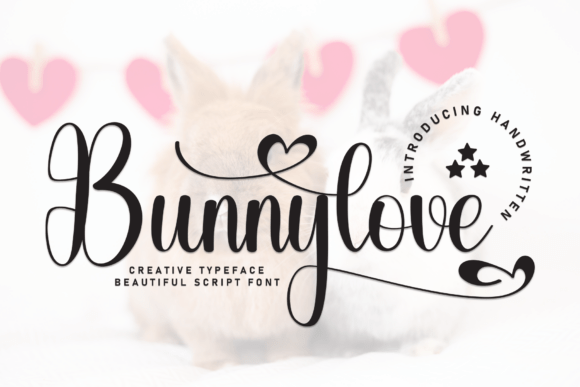
Discover the Sweet, Handwritten Magic of Bunnylove
There's a particular kind of warmth that only a handwritten font can bring to a design. It's the feeling of a personal note, a friendly hello, a touch of human imperfection that digital precision often misses. Bunnylove is a script font that captures this essence perfectly. It’s not just another decorative typeface; it’s a tool for injecting genuine cheerfulness and approachability into your creative work. Imagine the casual elegance of a well-loved notebook, the playful curves of a child’s drawing refined into a sophisticated form—that’s the heart of Bunnylove.
This handwritten font strikes a beautiful balance. Its letterforms flow with a natural, organic rhythm, avoiding the stiffness of mechanical script fonts. The connections between letters feel intuitive, and the overall x-height is generous, which is a practical choice for readability. While it has a distinctly sweet and playful personality, it avoids being overly whimsical or childish. This makes it a remarkably versatile creative font for adults. You’ll notice subtle variations in stroke weight that mimic the pressure of a pen on paper, adding that crucial layer of authenticity. It’s a typeface designed to foster joyful memories and create delightful visual experiences, whether on a wedding invitation or a social media post.
Where Bunnylove Truly Shines: From Personal Touches to Professional Projects
The real test of any premium font is its application. Bunnylove excels in scenarios where you need to communicate warmth, personality, and a personal touch. Think beyond the obvious. Yes, it’s a natural fit for wedding invitations and greeting cards, where its charm sets an immediate tone of celebration and intimacy. But its utility extends far into commercial and digital spaces.
- Branding & Logo Design: For businesses that want to appear friendly, approachable, and human—think boutique bakeries, artisan studios, lifestyle blogs, or children’s brands—Bunnylove can become a cornerstone of a brand identity. It works beautifully as a logo font for a wordmark or as a supporting accent font.
- Editorial & Packaging Design: In editorial design, use it for pull quotes, chapter titles, or section headers in magazines and books to break up dense serif font or sans serif font text. On packaging, it can make a product feel handmade and special, perfect for labels on jams, candles, or cosmetics.
- Digital & Web Design: In the digital realm, Bunnylove is a star for web design accents. Use it for hero section callouts, button text, or special offer announcements. It’s also incredibly effective for social media graphics, creating eye-catching quotes, sale announcements, and story templates that feel personal and engaging.
- Publishing & Marketing: As a display font, it’s ideal for book covers, especially in genres like romance, cozy mystery, or young adult fiction. In marketing, it can soften the hard sell of an email newsletter or make a promotional flyer feel like an invitation from a friend.
Making It Work: Practical Guidance for Using a Handwritten Font
Choosing a font like Bunnylove is just the first step. Using it effectively requires a designer’s eye for context and balance. Here’s how to integrate it into your projects with professionalism.
Pairing for Clarity and Hierarchy
The golden rule with a strong display font is to pair it with a neutral, highly readable counterpart. Bunnylove’s expressive nature means it should almost never be used for body text. Instead, let it headline. Pair it with a clean sans serif font like Lato, Open Sans, or Montserrat for body copy. This creates a clear visual hierarchy, where Bunnylove draws the eye for key messages, and the sans serif provides comfortable reading for longer passages. For a more traditional or elegant feel, a simple, modern serif font like Lora or Merriweather can also work beautifully.
Evaluating Fit and Readability
Before committing, ask: does this font’s personality match my project’s core message? Bunnylove is perfect for projects that value warmth and friendliness. It might not be the right fit for a corporate law firm’s website or a serious financial report. Always test it in context. Place a headline set in Bunnylove next to your other design elements. Does it harmonize or compete? Check its readability at the intended size, especially on smaller screens. A good handwritten font like Bunnylove maintains legibility, but it’s your responsibility to ensure the contrast and size are sufficient.
Understanding Your License
When you acquire Bunnylove, whether as a free download or a commercial font, scrutinize the license. The terms dictate how you can use it. A desktop license typically covers use in logos, printed materials, and images for social media. If you plan to use it on a website via @font-face, you’ll likely need a webfont license. For apps or software, an app license may be required. Always read the EULA (End User License Agreement) to ensure your use is fully compliant, protecting both your project and the font creator’s work.
Ultimately, a typeface like Bunnylove is more than just a collection of glyphs. It’s a design asset that carries emotion. By understanding its strengths—its ability to add a sprinkle of delight, its suitability for a wide range of modern typography applications, and its power to shape brand perception—you can use it not just as decoration, but as a strategic tool to connect with your audience on a human level. It’s the difference between a design that’s seen and one that’s felt.